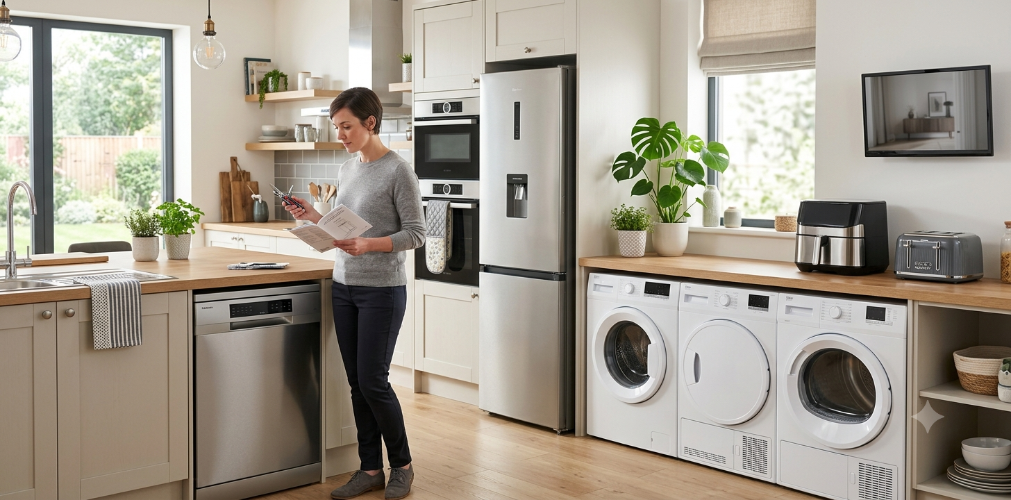
Most household appliances are designed to provide many years of reliable service, but no appliance lasts forever.
Knowing the typical lifespan of your appliances can help you decide whether it’s worth paying for a repair or whether replacing it with a newer, more energy-efficient model makes better financial sense.
Here’s a guide to how long some of the most common household appliances typically last.
Washing Machines
Typical lifespan: 10–12 years.
A good quality washing machine should comfortably last around a decade with regular use.
If your machine is becoming noisy, frequently breaking down or no longer cleaning clothes effectively, it may be time to consider a replacement.
Simple maintenance, such as cleaning the detergent drawer, checking the door seal and avoiding overloading the drum, can help extend its life.
Tumble Dryers
Typical lifespan: 10–13 years.
Modern tumble dryers are built to last, especially when the lint filter and condenser are cleaned regularly.
If drying times become much longer or repairs start becoming frequent, replacing the appliance may be more economical.
Fridge Freezers
Typical lifespan: 10–15 years.
A fridge freezer runs 24 hours a day, making it one of the hardest-working appliances in your home.
Keeping the condenser coils clean (where accessible) and ensuring good ventilation around the appliance can help maximise its lifespan.
Dishwashers
Typical lifespan: 9–12 years.
Regular cleaning of filters and spray arms can help keep a dishwasher performing efficiently for many years.
If cleaning performance declines or repairs become increasingly expensive, a newer model may also reduce water and electricity consumption.
Electric Ovens
Typical lifespan: 13–15 years.
Electric ovens often last longer than many other household appliances.
Replacing worn seals and keeping the interior clean can help maintain cooking performance over time.
Microwaves
Typical lifespan: 7–10 years.
Microwaves generally have a shorter lifespan than larger appliances due to frequent daily use.
If heating becomes uneven or significantly slower, replacement is often the most practical option.
Air Fryers
Typical lifespan: 5–8 years.
Air fryers have quickly become one of the most popular kitchen appliances.
Cleaning the basket after each use and avoiding abrasive cleaning products can help keep the appliance working efficiently for years.
Televisions
Typical lifespan: 7–10 years or more.
Modern LED, QLED and OLED televisions can provide many years of excellent picture quality.
Many people replace their TV because they want newer features, larger screens or improved picture technology rather than because the television has stopped working.
When Is It Better to Replace Rather Than Repair?
While many appliances can be repaired, replacement may make more sense if the appliance is close to or beyond its typical lifespan, repair costs are high compared with the value of the appliance, the appliance is becoming unreliable, a newer model would offer significantly better energy efficiency, or replacement parts are difficult to source.
If you’re unsure, comparing the repair cost with the price and benefits of a modern replacement can help you make the right decision.
Final Thoughts
Household appliances are long-term investments, and with proper care many will provide reliable service for years.
Understanding the typical lifespan of each appliance can help you plan ahead, avoid unexpected breakdowns and decide when it’s time to upgrade.
Whether you’re replacing an ageing washing machine, upgrading your kitchen or looking for a more energy-efficient appliance, Foy’s Electrical offers a wide range of trusted brands to suit every home and budget.